
Paths and Compartments
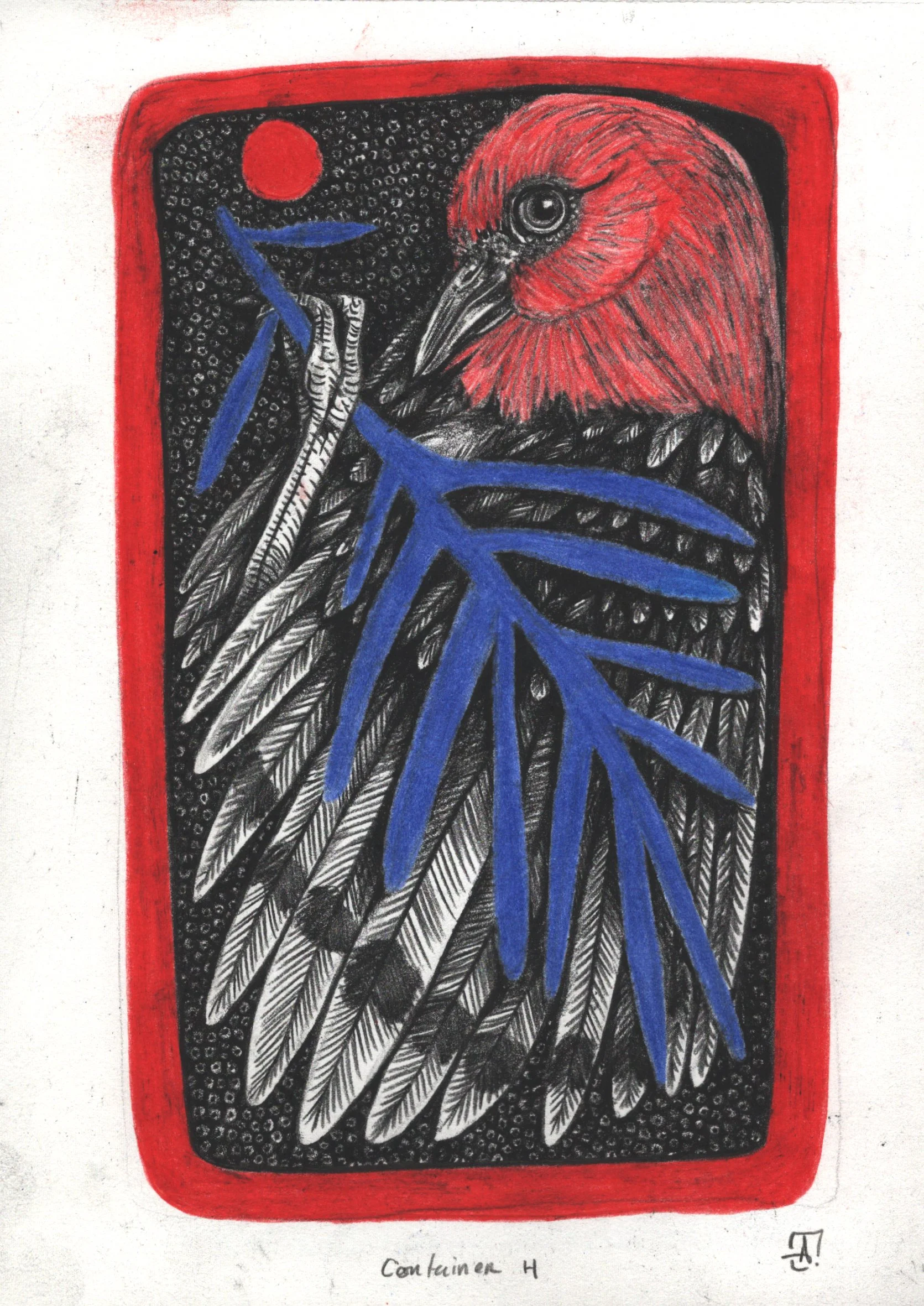
I’ve been researching the effects of human industrialization and the increasing warming of the climate and the impacts both have together on the the billions of birds in population around us. Specifically, the species most under threat along the Mississippi Flyway. This flyway is the migratory path which is home to over 325 bird species. Approximately 40% of North America’s birds us this path which stretches over 2,500 miles following the Mississippi River basin . From the Great Lakes through the Gulf of Mexico. Continuing on into South America. For my work I also include the impact to species that extend this flyway into the far reaches of the Gulf including Costa Rica, Colombia and Venezuela. Key trading goods like Coffee have huge impact between South America, Mexico, Cuba and the Mississippi Flyway through the Untied States and into Canada. See my other series on Shade Grown Coffee and the impact to warblers and other bird species here: https://www.andrewnaeger.com/journal/cerulean
So, asking the question, how does one raise awareness around the topic of human impact. First, we observe the key causes threatening species. As global climate temperatures rise, the impact of this is well documented. However, it’s the combination of human activity under the topic of encroachment and environmental human product waste that interests me the most. The rise in global temperature just exasperates issues lurking under the surface, or in this case, infecting the surface of wild life refuse and habitats. I’ve obtained the most threatened list of this Flyway through sourcing research from groups like the National Audubon Society. On the list, I dive deeper into the sightings and reporting of conversationalists on specific birds. A few species that top my list are small species like the Wood Thrush. This species in particular is starting to alter it’s migratory nesting sites due to forestation losses across the United States. This is typically due to large agricultural crop development and housing. For the agricultural industry, the Mississippi Flyway is largely impacted due to the fertile ground hte river provides farmers for planting and harvesting. Also the temperature rises and storms increase intensity, flooding also becomes a threat to crop yields and nesting sites alike.
My theme picks up here, with ongoing research. In my drawing studies, I’m looking to convey this ongoing change to bird species in this environment through reflecting in an symbolic way, the paths traveled and the habitats needed through shapes, color, objects and mood of compositions. Consider the context of the world through the birds eyes, put into more context of the human condition in order to develop empathy and conversation around the impact we have and the spaces needed for this bird species to not only survive, but to thrive.
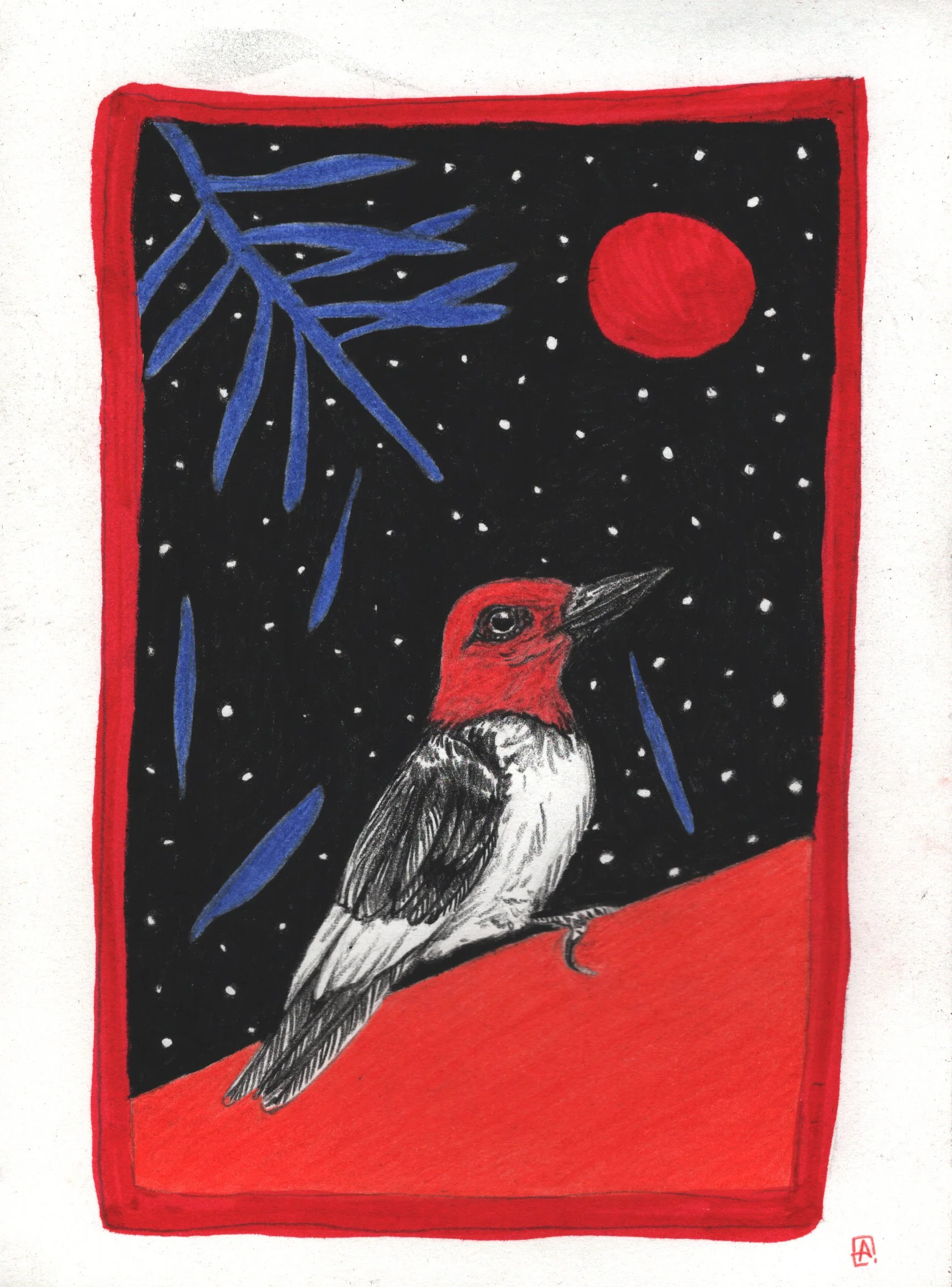
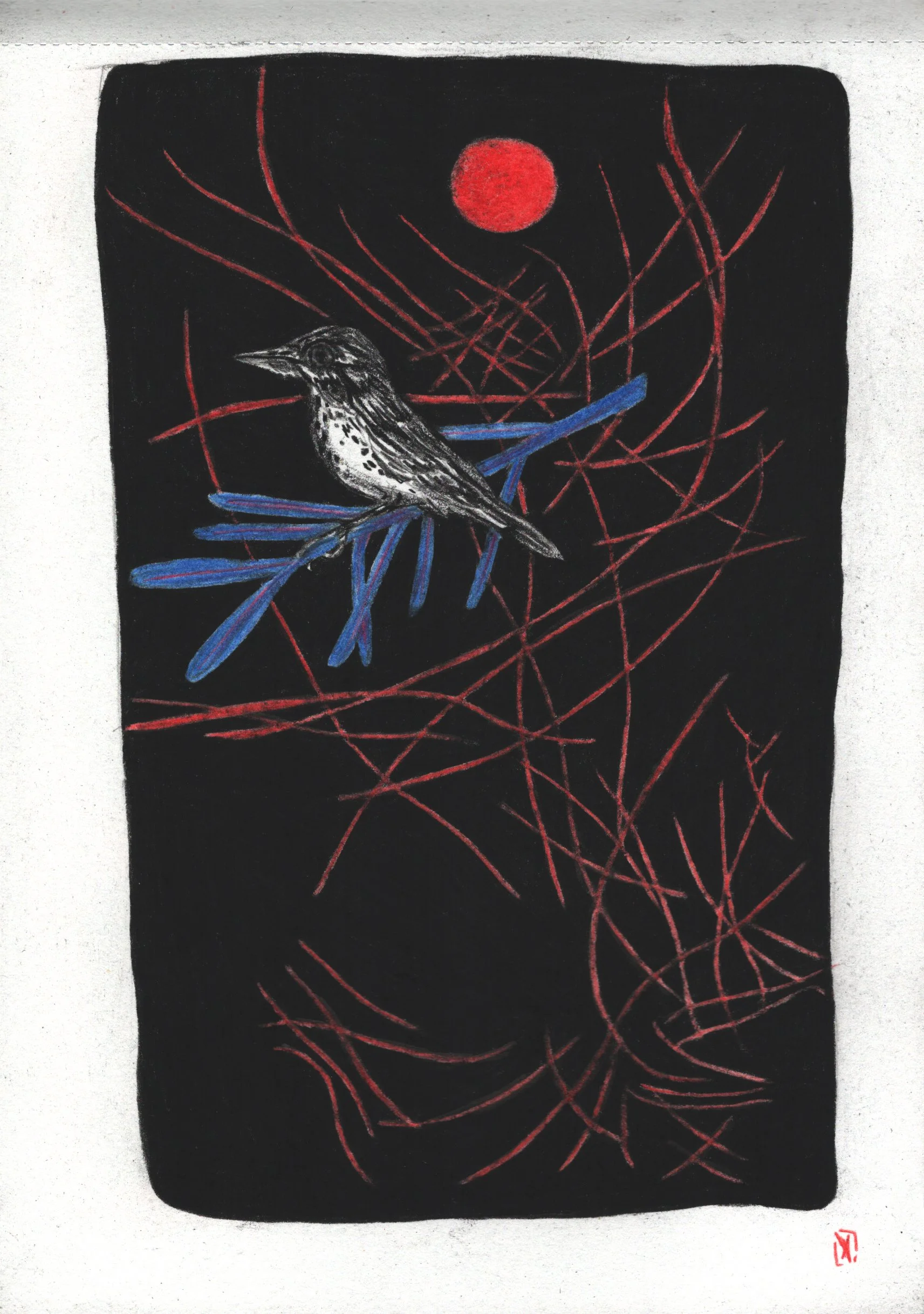
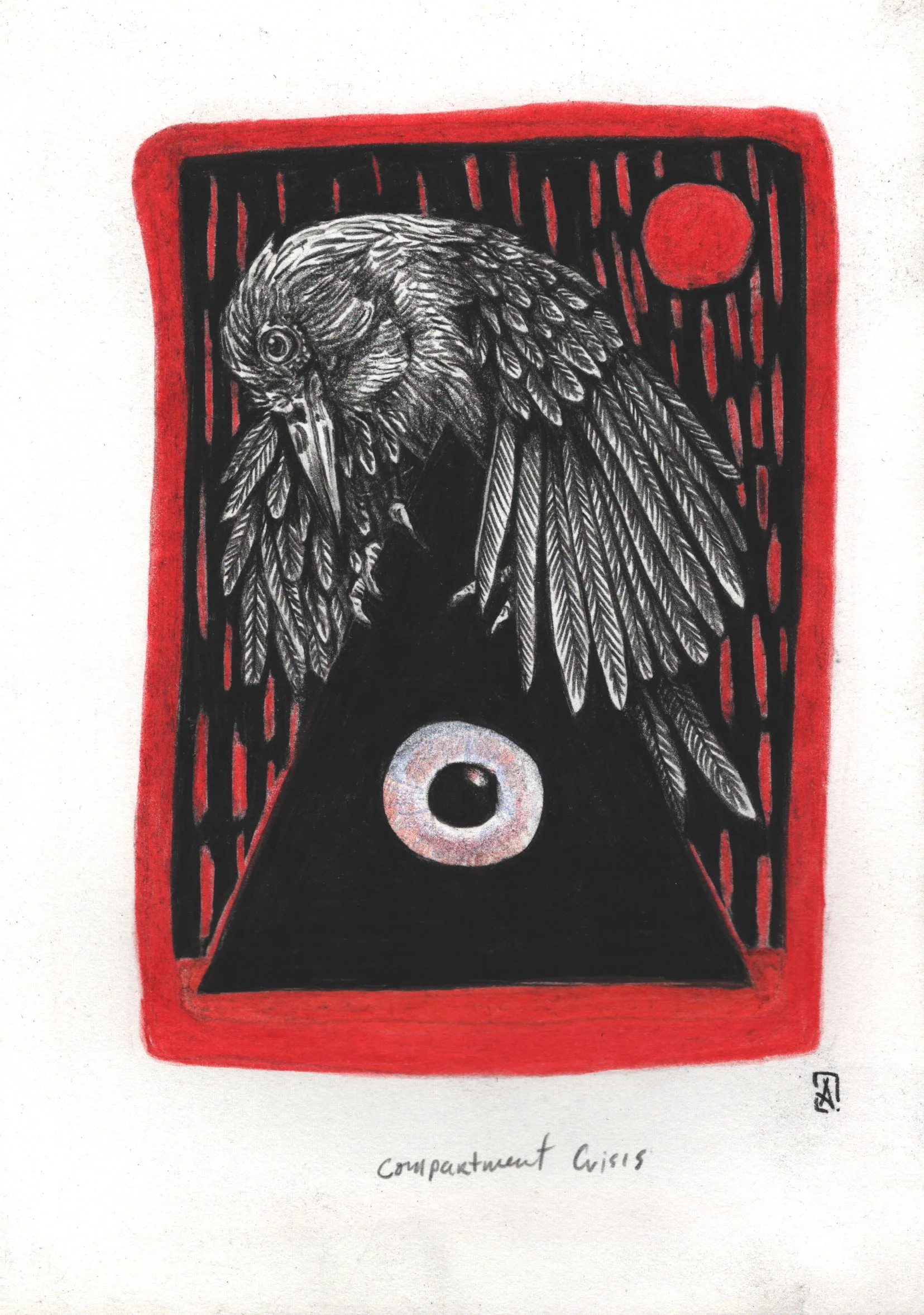
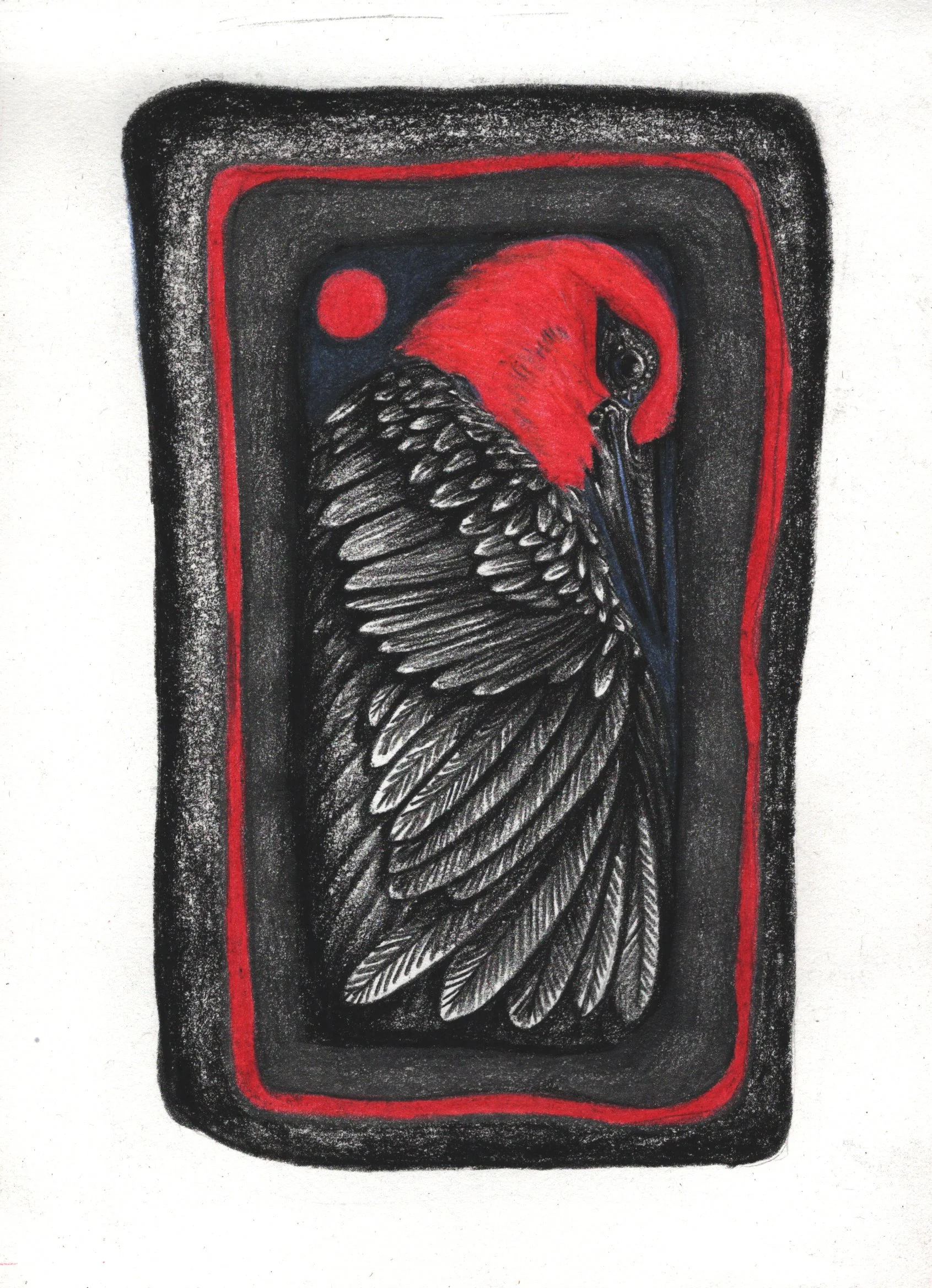
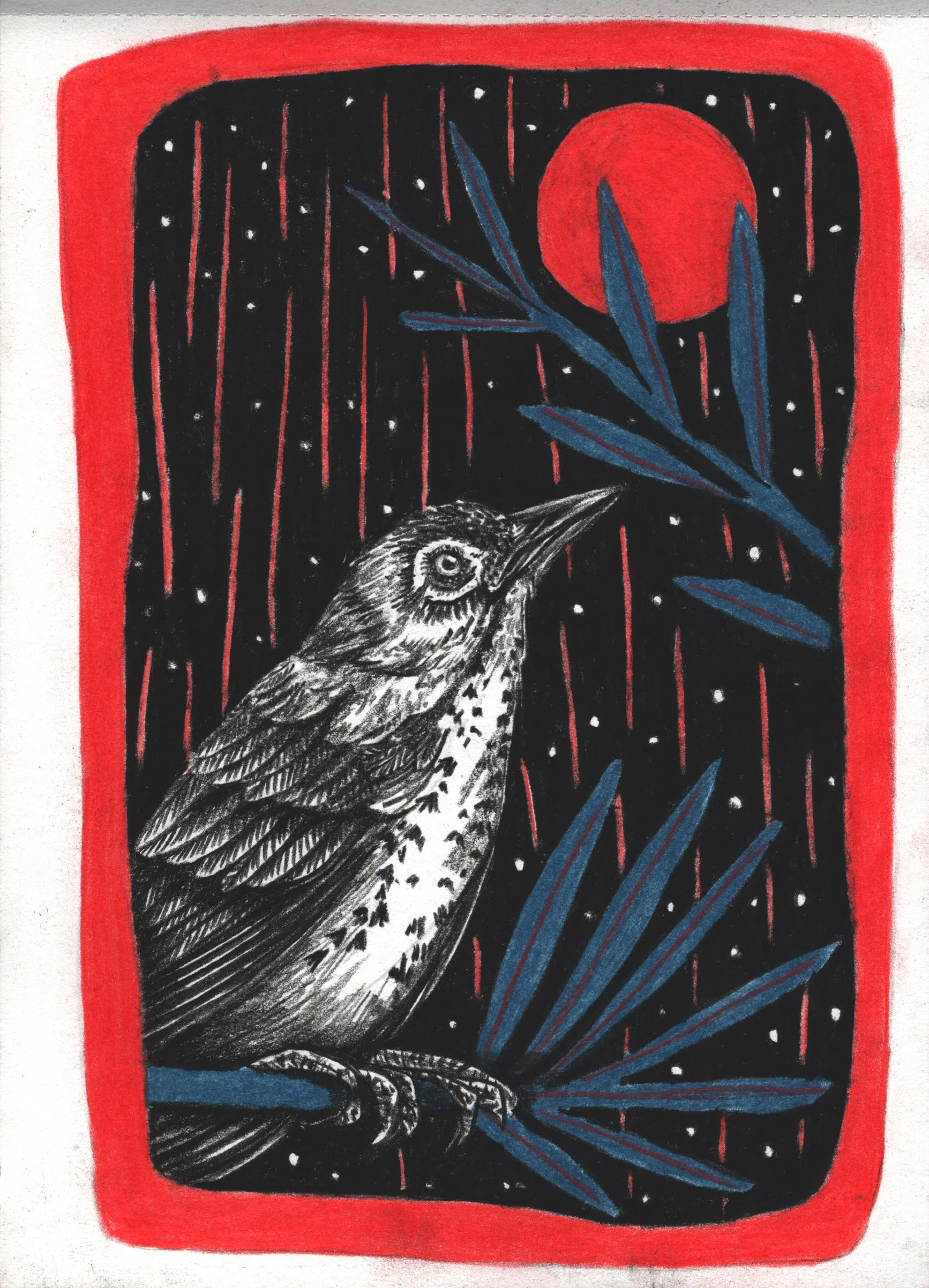
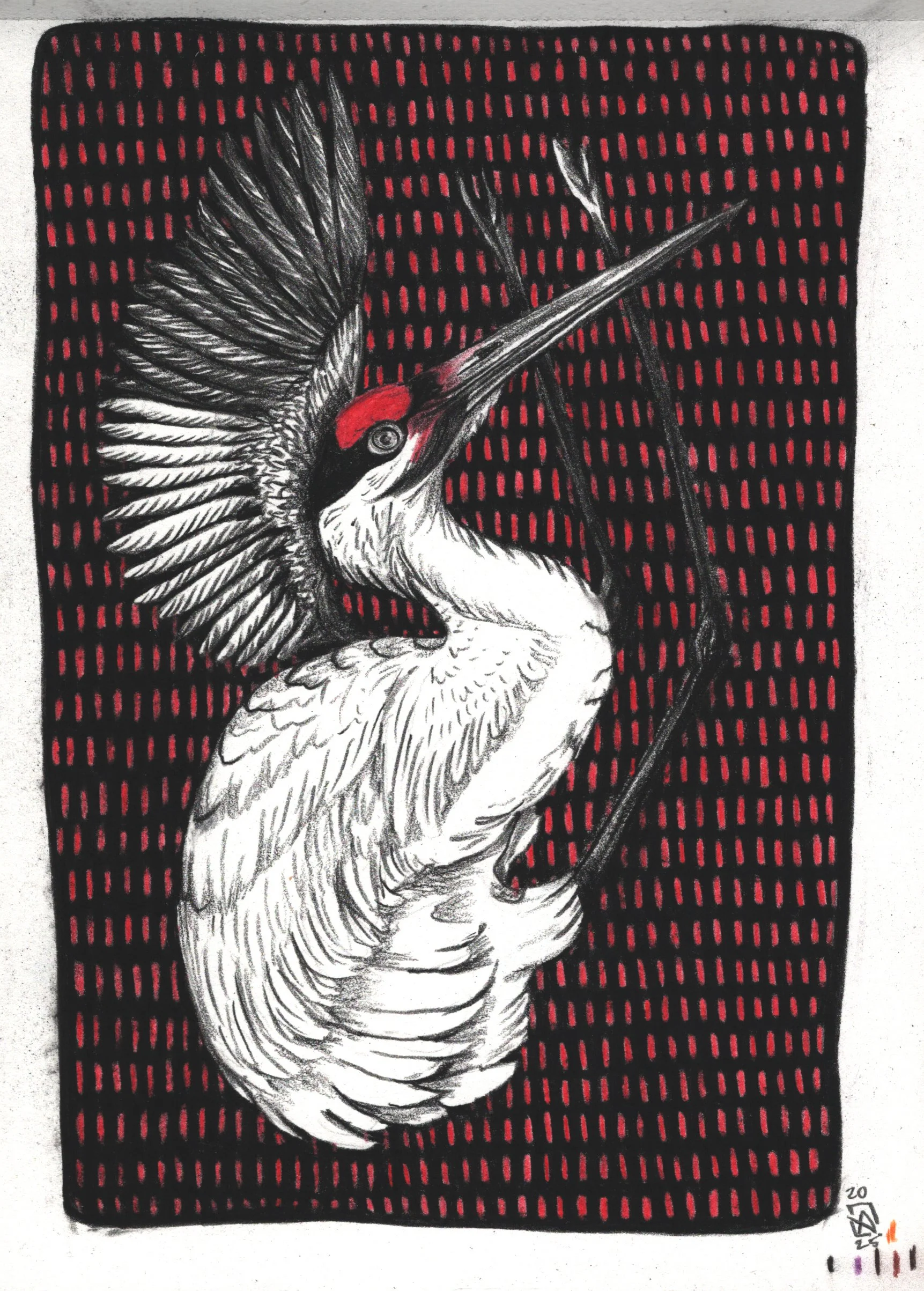
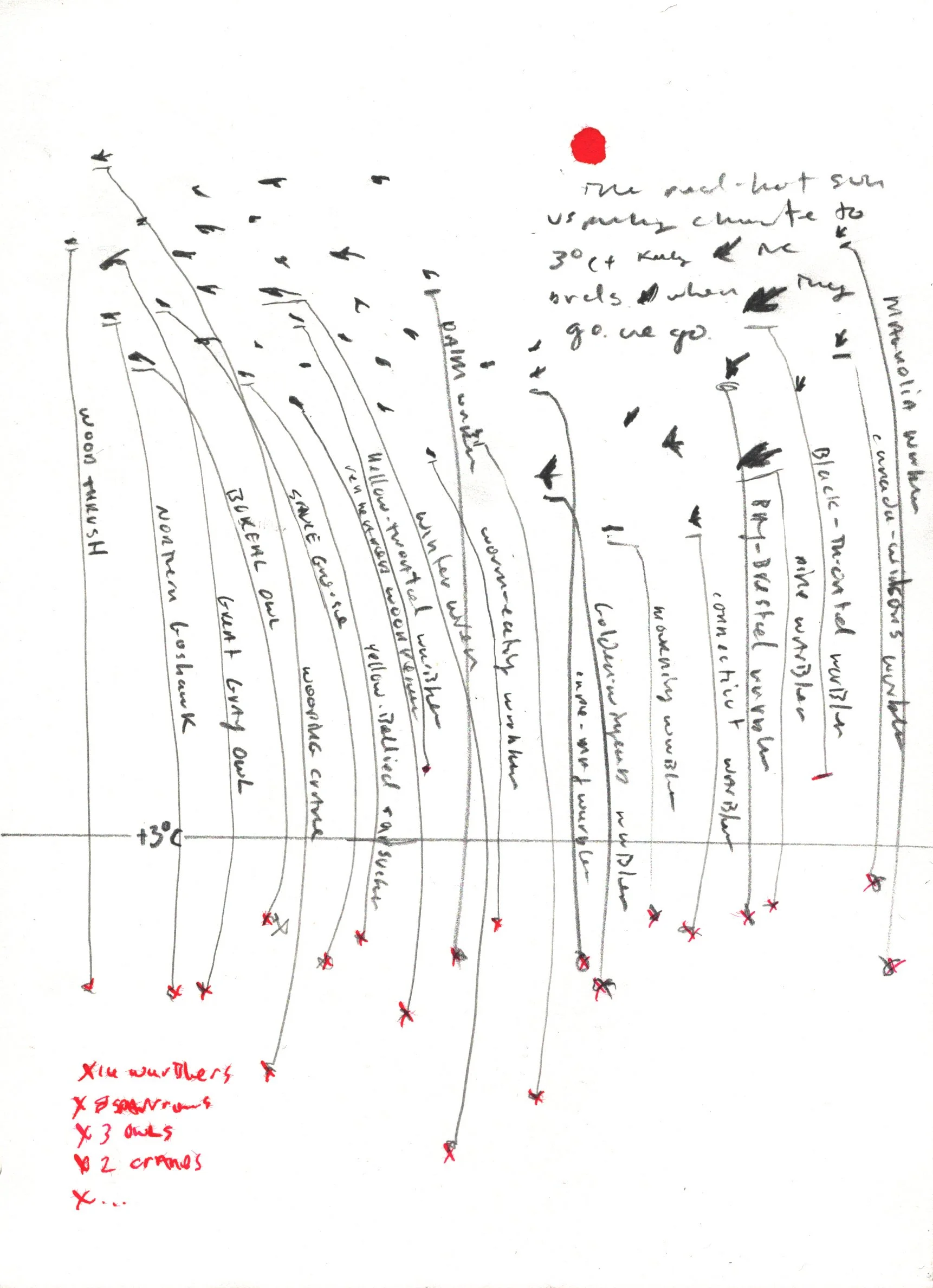
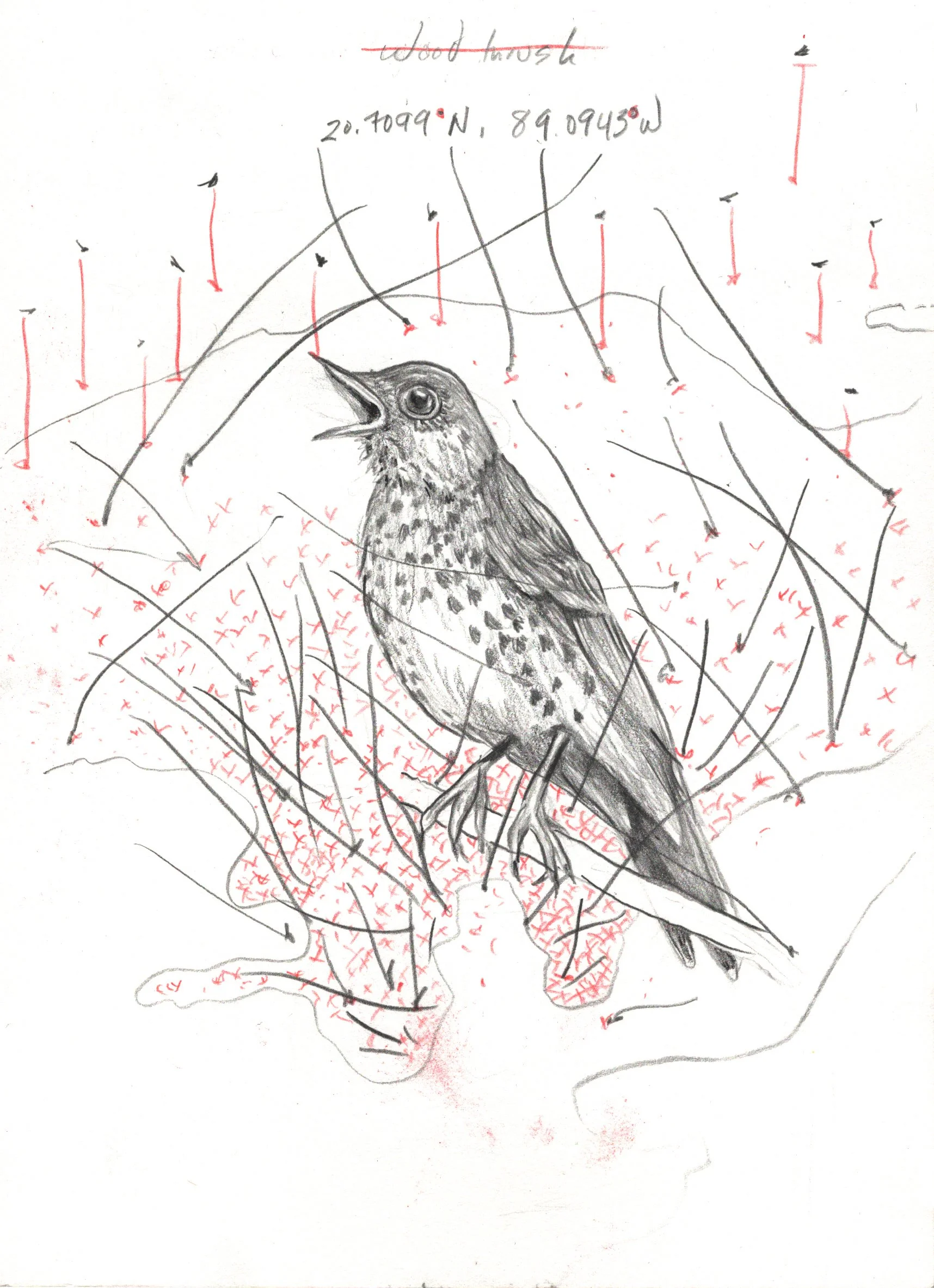
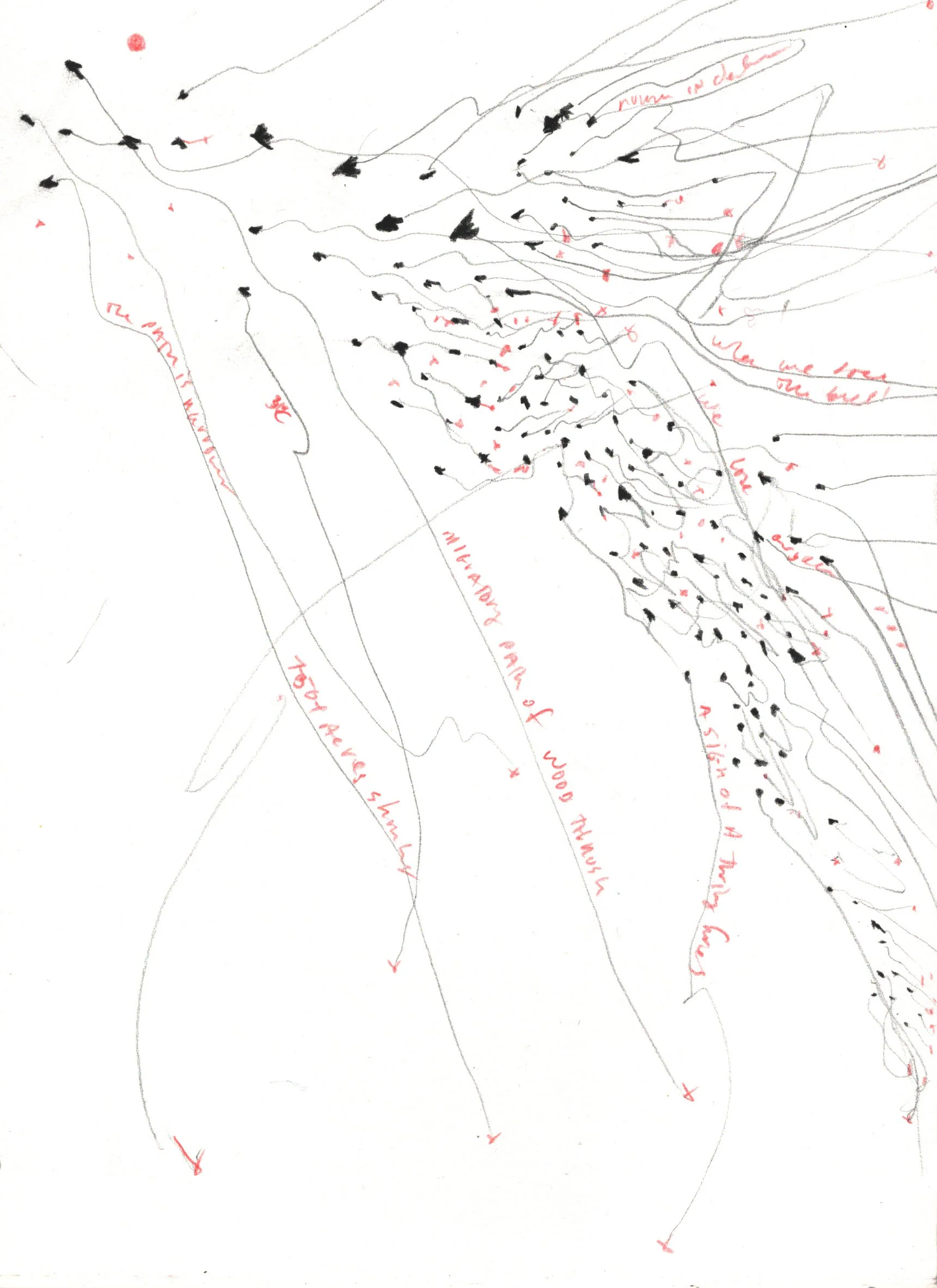
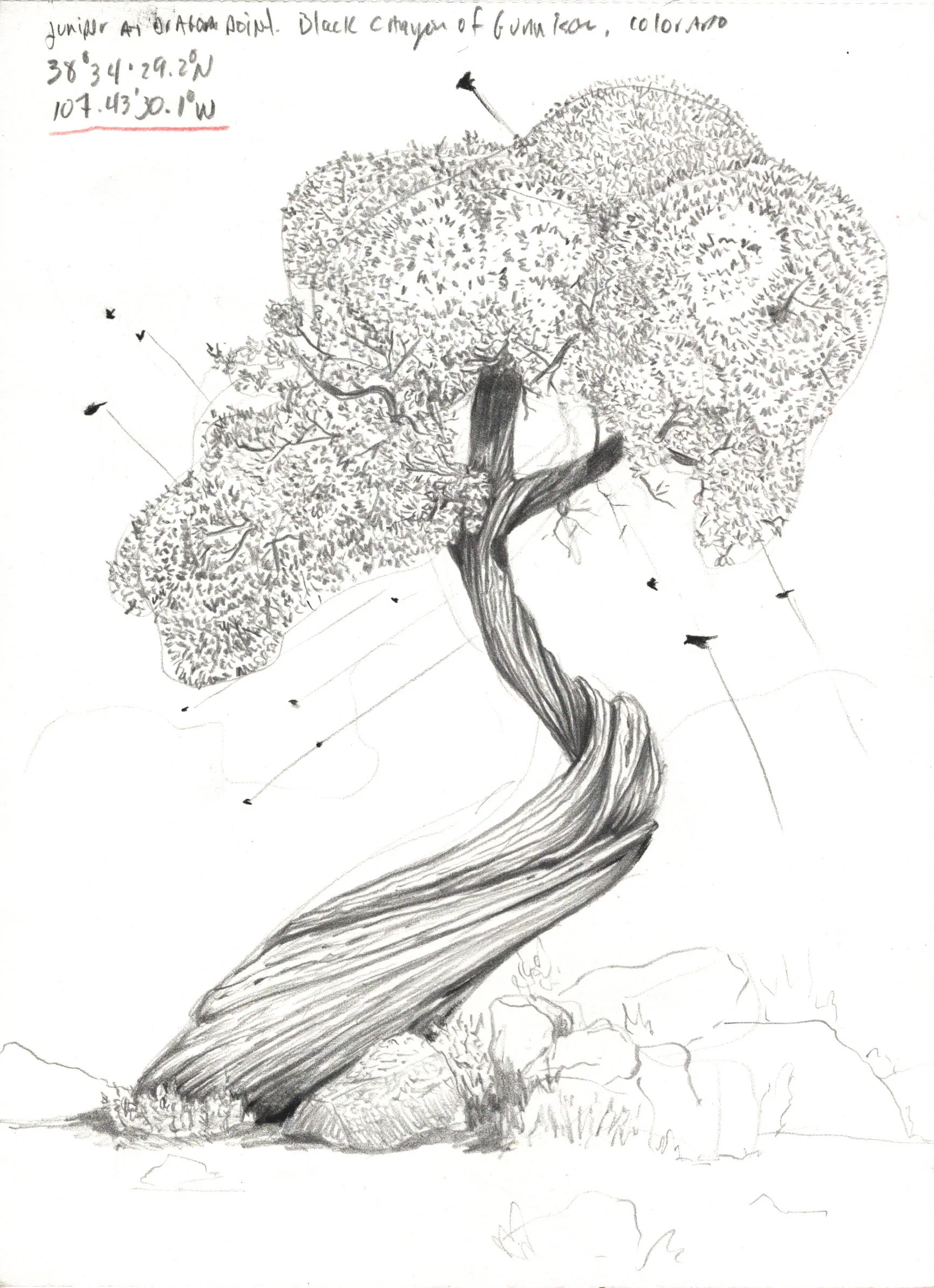
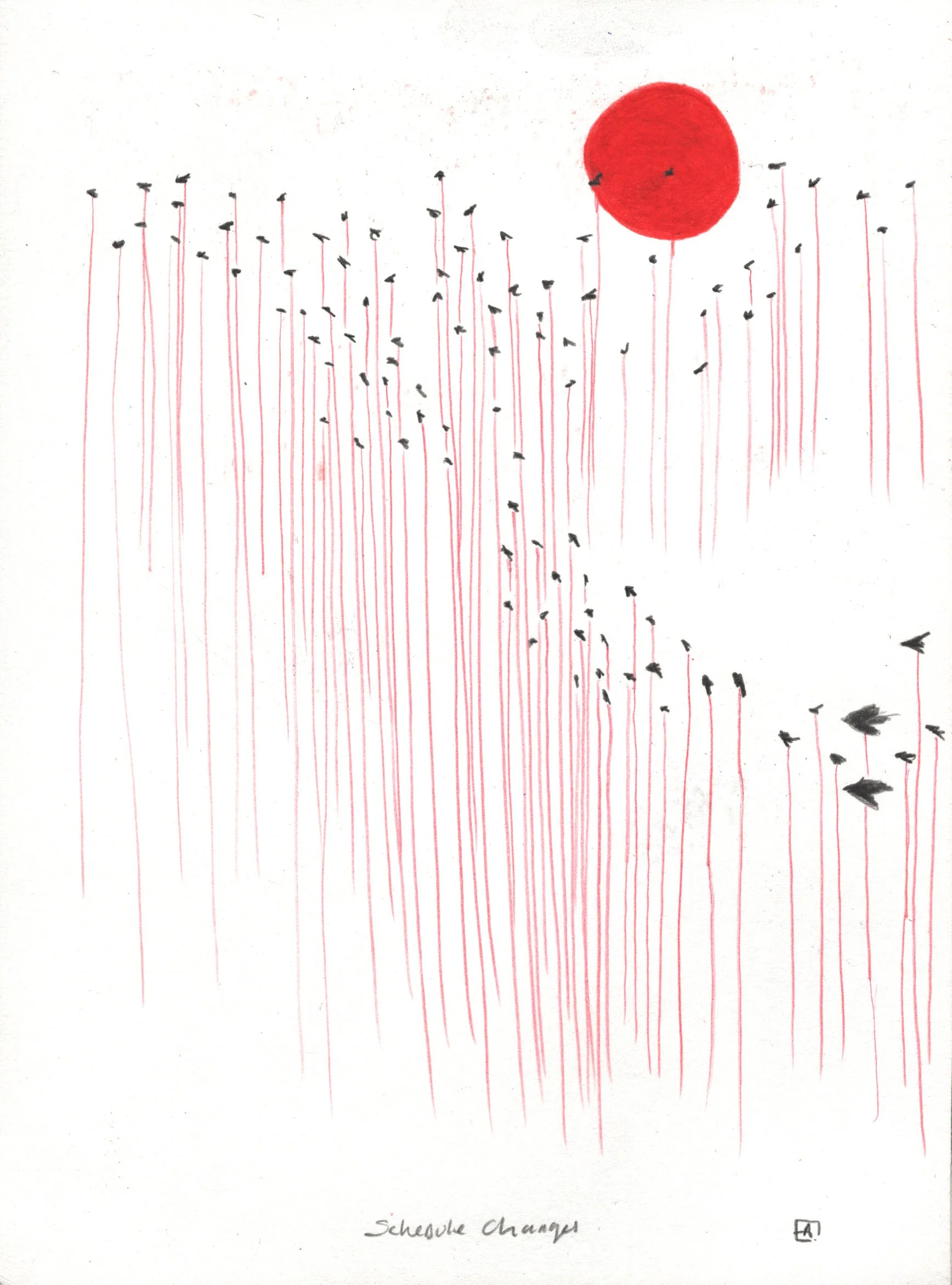
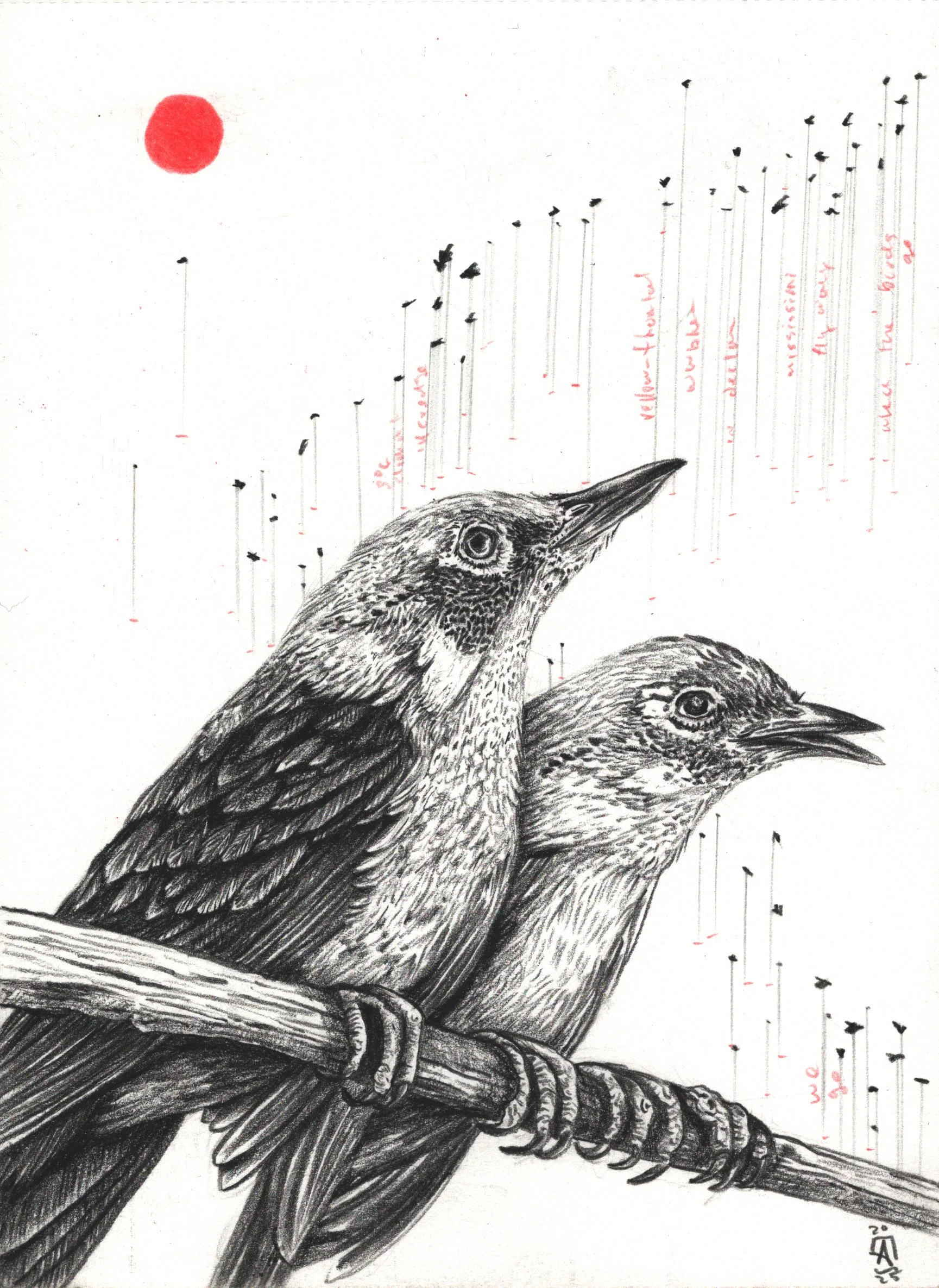
From these studies, I am developing larger work. 2 complete, more to come. With each work, parts of the story for each species will be connecting the human activity and condition with the direct cause and effect of birds habitats and how they migrate, populate and survive in this new paradigm.
Sketchbook pages 5x7 - charcoal, color pencil, graphite, and ink on paper.